The Walking Golfer Revolution: Health, Pace, and Untapped Revenue
The Shift Nobody Saw Coming
Something interesting is happening at golf courses across America. The golf cart—once the undisputed king of the fairways, the symbol of leisurely luxury golf—is facing unexpected competition from the most basic form of transportation: walking.
And it’s not just fitness enthusiasts or purists driving this trend. It’s millennials tracking their steps on Apple Watches. It’s retirees following doctor’s orders. It’s busy executives squeezing in early morning rounds before the office. It’s competitive players training for tournaments. It’s environmentally conscious golfers reducing their carbon footprint.
The walking golfer is back. And forward-thinking courses are realizing this isn’t a threat to cart revenue—it’s an untapped opportunity.
But here’s what most courses get wrong: they treat walkers as second-class citizens. No amenities, no options, no revenue strategy beyond collecting the green fee. Meanwhile, these golfers would happily spend money on services that enhance their walking experience.
Let’s talk about the walking renaissance, why it matters for pace of play, the undeniable health benefits, and most importantly—how smart golf courses are turning walking golfers into a significant revenue stream.
Part 1: The Walking Renaissance
Why Walking is Back (And Growing)
The Fitness Tracking Era
Modern golfers wear devices that count everything:
- Apple Watch showing “You’ve closed your rings!”
- Fitbit tracking 20,000+ steps per round
- Garmin watches calculating calories burned
- Strava logging distance and elevation
Walking 18 holes delivers 10,000-20,000 steps depending on course layout. That’s a full day’s fitness goal in a single activity that’s also enjoyable, social, and competitive.
The data gamification makes walking rewarding beyond the golf itself.
The Health Consciousness Wave
The pandemic accelerated health awareness dramatically. Golfers are thinking about:
- Cardiovascular health
- Joint mobility and strength
- Mental wellness and stress reduction
- Longevity and active aging
- Preventive health versus reactive medicine
Golf physicians and physical therapists increasingly recommend walking the course as ideal exercise: low-impact, sustained aerobic activity, outdoors in nature, with social engagement.
The Pace-of-Play Perception Shift
For decades, the conventional wisdom was: “Carts speed up play.”
But courses are discovering the opposite—or at least finding that walking doesn’t slow play as much as feared, and in many cases, can actually be faster.
More on this in Part 2, but the perception is shifting: walking doesn’t automatically mean slow play.
The Environmental Factor
Younger golfers especially care about environmental impact:
- Cart emissions (gas carts)
- Battery disposal (electric carts)
- Turf wear from cart traffic
- Chemical runoff from cart path maintenance
- Energy consumption charging cart fleets
Walking has zero environmental impact. For eco-conscious golfers, this matters.
The “Pure Golf” Movement
Some golfers simply prefer the traditional experience:
- Walking the course as the game was designed
- Reading slopes and breaks by walking the green surrounds
- Better connection to course architecture
- Rhythm and meditation of the walk
- Caddie programs (where available)
These aren’t curmudgeons stuck in the past—they’re golfers who’ve chosen walking as their preferred experience.
The Cost-Conscious Golfer
Let’s be honest: some golfers walk because cart fees are expensive.
- $20-30 cart fee on top of green fee
- Over 50 rounds per year, that’s $1,000-1,500 saved
- For retirees on fixed income or young golfers building the habit, this adds up
If courses don’t offer walking-friendly experiences, these golfers play less or go elsewhere.
The Numbers Behind the Trend
While comprehensive industry data is limited, indicators suggest walking is growing:
National Golf Foundation Observations:
- Walking rates stable or slightly increasing at courses that accommodate it
- Significant regional variation (walkable courses in temperate climates see higher rates)
- Younger players (under 40) show higher propensity to walk than previous generations at same age
Anecdotal Course Reports:
- Courses adding walking-friendly amenities report 15-30% increases in walking rounds
- Push cart rentals (especially electric) growing 25-40% annually where offered
- Early morning “walkers-only” tee times often fill first
The Demographic Shift:
- Baby Boomers aging into retirement have time and doctor recommendations to walk
- Millennials track fitness metrics and prefer active experiences
- Gen X executives use walking rounds as exercise and networking
Part 2: The Pace of Play Reality
The Great Debate: Do Walkers Slow Play?
This is the question every course operator asks, and the answer is more nuanced than you’d think.
The Case Against Walking (Traditional View):
- Distance from Ball to Next Shot
- Cart riders can drive directly to each ball
- Walkers must walk the full distance
- On a long par 5 with wayward shots, this adds time
- Getting to the Green
- Carts can drive to green while players finish holes
- Walkers arrive together, potentially waiting
- Between Holes
- Carts transport quickly from green to next tee
- Walkers must walk the entire distance
- Fatigue Factor
- Tired walkers potentially play slower on back nine
- Cart riders stay fresh throughout
The Case for Walking (Emerging Reality):
- No Cart Restrictions
- No 90-degree rule delays
- No cart path only restrictions
- No waiting for cart partner
- Direct routes to balls
- Continuous Motion
- Walkers are always moving toward next shot
- Cart riders often wait for partner before driving
- Less “standing around” time
- Better Preparation
- Walking to ball = thinking about next shot
- Arriving at ball mentally ready
- Cart riders often arrive distracted (conversation)
- Fewer Distractions
- No driving, parking, waiting for carts
- Focus entirely on golf
- Natural rhythm develops
- Group Dynamics
- Walking foursomes spread out naturally
- Each player at their ball immediately
- Cart foursomes bunch at carts
What the Data Actually Shows
Surprising Research Findings:
Studies comparing walking vs. riding groups (controlled for skill level) show:
- Skilled Walkers (single-digit handicaps): Often 5-15 minutes FASTER than riders
- Average Walkers (10-20 handicaps): Roughly equivalent to riders (within 10 minutes)
- Novice Walkers (20+ handicaps): 10-25 minutes slower than riders
Key Variables That Matter More Than Walking vs. Riding:
- Skill level (biggest factor by far)
- Course management
- Ready golf practices
- Pre-shot routine length
- Group dynamics and social chat
The Truth: Walking vs. riding is NOT the primary pace determinant. Player behavior is.
The Optimal Conditions for Walking and Pace
When Walking Works Best for Pace:
✅ Walkable Course Design:
- Short green-to-tee transitions (under 100 yards)
- Moderate elevation changes
- Logical routing
- Adequate walking paths
✅ Prepared Walkers:
- Push carts or caddies (not carrying)
- Organized bags (easy club access)
- Understand ready golf
- Physically capable
✅ Course Management:
- Strategic tee time spacing
- Walking-friendly course setup
- Staff education on walking groups
- Ranger monitoring
✅ Weather:
- Moderate temperatures (not extreme heat)
- Dry conditions
- Light wind
When Cart Riding Makes More Sense:
⚠️ Course Design Issues:
- Long green-to-tee distances (200+ yards)
- Extreme elevation changes
- Challenging terrain
- Lack of walking paths
⚠️ Weather Extremes:
- High heat and humidity
- Heavy rain
- Extreme cold
- Strong winds
⚠️ Player Situations:
- Physical limitations or injuries
- Time constraints (must finish quickly)
- Carrying heavy bags (no push cart)
- Unfamiliar with course
Making Walking Work for Pace: Best Practices
For Courses:
- Separate Tee Times by Mode
- Walking groups: X minutes apart
- Riding groups: Y minutes apart
- Match pace expectations to groups
- Walking-Specific Tee Times
- Early morning “walkers only” slots
- Groups matched by pace preference
- Removes friction between modes
- Course Setup Considerations
- Tee markers that minimize back-tracking
- Clear walking paths between holes
- Strategically placed restrooms and water
- Accessible trash and recycling
- Ranger Communication
- Monitor pace regardless of mode
- Educate walkers on ready golf
- Intervene early if group falling behind
- Push Cart Infrastructure
- Rental push carts readily available
- Push cart parking at greens
- Paths wide enough for push carts
For Walkers:
- Ready Golf Always
- Walk directly to your ball
- Be ready when it’s your turn
- Don’t wait for “honors” unnecessarily
- Efficient Club Selection
- Bring 2-3 clubs to ball if uncertain
- Organized bag for quick access
- GPS watch or rangefinder (faster than walking off)
- Keep Pace with Group Ahead
- Should see them on every hole
- If more than one hole open ahead, pick up pace
- Strategic Ball Watching
- Help playing partners find balls
- Mark ball positions immediately
- Limit search time to 3 minutes
- Use Push Carts (Not Carry)
- Significantly reduces fatigue
- Easier to maintain pace
- Less temptation to rest
The Bottom Line on Pace
Walking doesn’t inherently slow play—poor practices do.
A prepared, skilled walking foursome on a walkable course will match or beat a riding group.
An unprepared walking group on a cart-centric course will create backups.
The key is proper management, not banning walking.
Part 3: The Undeniable Health Benefits
Walking Golf as Exercise
The Numbers:
Walking 18 holes:
- Distance: 4-6 miles (depending on course layout and shot accuracy)
- Steps: 10,000-20,000 (varies by course)
- Duration: 3.5-5 hours
- Elevation: 200-800+ feet climbed (hilly courses)
- Calories burned: 1,200-2,500 (depending on weight, pace, terrain)
Compare to other activities (per hour):
- Walking golf: 300-500 calories/hour
- Walking (flat ground, 3mph): 200-250 calories/hour
- Jogging (5mph): 400-500 calories/hour
- Swimming: 400-600 calories/hour
- Cycling (moderate): 400-600 calories/hour
Walking golf is legitimate cardiovascular exercise disguised as recreation.
Cardiovascular Benefits
What Walking Golf Does for Your Heart:
- Sustained Aerobic Activity
- Heart rate elevated for 3-5 hours
- Moderate intensity (ideal for fat burning)
- Low risk compared to intense exercise
- Builds endurance over time
- Blood Pressure Reduction
- Regular walking reduces systolic BP by 4-9 points
- Comparable to some medications
- Cumulative benefit over time
- Cholesterol Improvement
- Increases HDL (good cholesterol)
- Reduces LDL (bad cholesterol)
- Lowers triglycerides
- Reduced Heart Disease Risk
- Walking 3-4 rounds per week = 30-50% lower heart disease risk
- Equivalent to other moderate exercise programs
Why Doctors Recommend Walking Golf:
Cardiologists often prescribe walking golf because:
- Self-paced (can slow down if needed)
- Social support (playing partners)
- Motivating (game provides purpose)
- Consistent (scheduled tee times = routine)
- Outdoors (additional mental health benefits)
Musculoskeletal Benefits
Strengthening and Mobility:
- Lower Body Strength
- Quadriceps and hamstrings from walking
- Calves from uneven terrain
- Glutes from inclines
- Hip flexors from varied movement
- Core Engagement
- Carrying/pushing bag engages core
- Balance on slopes requires core stability
- Golf swing itself is core-intensive
- Joint Health
- Low-impact compared to running
- Natural range of motion movements
- Lubrication of joints through movement
- Maintains flexibility
- Bone Density
- Weight-bearing exercise stimulates bone growth
- Reduces osteoporosis risk
- Particularly important for aging golfers
Injury Prevention vs. Cart Riding:
Riding carts can actually increase injury risk:
- Sudden movements from seated position
- Lack of warm-up between shots
- Cold muscles attempting full swings
- Back strain from sitting and twisting
Walking provides:
- Continuous warm-up between shots
- Gradual muscle engagement
- Natural stretching through varied movement
- Better body awareness
Mental Health Benefits
The Psychological Impact:
- Stress Reduction
- Outdoor exposure reduces cortisol
- Natural settings promote relaxation
- Physical activity releases endorphins
- Meditative rhythm of walking
- Cognitive Function
- Aerobic exercise improves brain function
- Course strategy engages problem-solving
- Social interaction stimulates cognition
- Reduces dementia and Alzheimer’s risk
- Mood Enhancement
- Walking golf shows equivalent effects to antidepressants in some studies
- Sunlight exposure boosts Vitamin D and mood
- Achievement and improvement provide satisfaction
- Social connection combats isolation
- Mindfulness and Presence
- Walking pace allows observation and appreciation
- Connection to nature and surroundings
- Focus on present moment (not past/future)
- Reduction in anxiety and rumination
Longevity and Aging
Walking Golf as Fountain of Youth:
Research shows regular golfers (especially walkers) live 5 years longer on average than non-golfers, attributed to:
- Sustained Physical Activity
- Maintains muscle mass (fights sarcopenia)
- Preserves cardiovascular function
- Maintains mobility and independence
- Social Engagement
- Reduces social isolation (major mortality risk)
- Provides purpose and routine
- Maintains cognitive stimulation
- Outdoor Exposure
- Vitamin D from sunlight
- Fresh air and nature exposure
- Circadian rhythm regulation
- Continued Challenge
- Golf never “solved” – always improving
- Mental engagement prevents cognitive decline
- Purpose and goals into retirement
The Aging Athlete Advantage:
Walking golfers maintain:
- Better balance (reduces fall risk)
- Greater functional fitness (activities of daily living)
- Superior cardiovascular health
- Enhanced quality of life in later years
Special Populations
Cardiac Rehabilitation:
Walking golf is increasingly prescribed as cardiac rehab:
- Gradual, controllable intensity
- Monitored heart rate zones
- Social motivation
- Long-term sustainability
Diabetes Management:
Walking golf helps Type 2 diabetes:
- Improved insulin sensitivity
- Blood sugar regulation
- Weight management
- Reduced medication needs in some cases
Mental Health Treatment:
Walking golf prescribed for:
- Depression (as effective as medication for mild-moderate cases)
- Anxiety disorders
- PTSD (particularly for veterans)
- Substance abuse recovery (healthy replacement behavior)
Senior Health:
Older golfers who walk:
- Maintain independence longer
- Reduce fall risk
- Preserve cognitive function
- Stay socially connected
The Medical Endorsement
Professional Health Organizations Supporting Walking Golf:
- American Heart Association
- American College of Sports Medicine
- National Institute on Aging
- Various cardiology associations worldwide
The Prescription:
Many doctors now literally prescribe “walking golf 2-3x per week” as they would medication.
The combination of exercise, outdoor exposure, social engagement, and enjoyment creates adherence rates far exceeding gym memberships or solo walking programs.
Part 4: Revenue Opportunities for Golf Courses
The Missed Opportunity
Here’s where most courses fail: They treat walking as a revenue loss (no cart fee) rather than a revenue opportunity.
This mindset leaves money on the table. Walkers would spend on services and products that enhance their experience—if courses offered them.
Let’s explore the revenue streams smart courses are developing.
Revenue Stream 1: Electric Push Cart Rentals
The Premium Push Cart Revolution
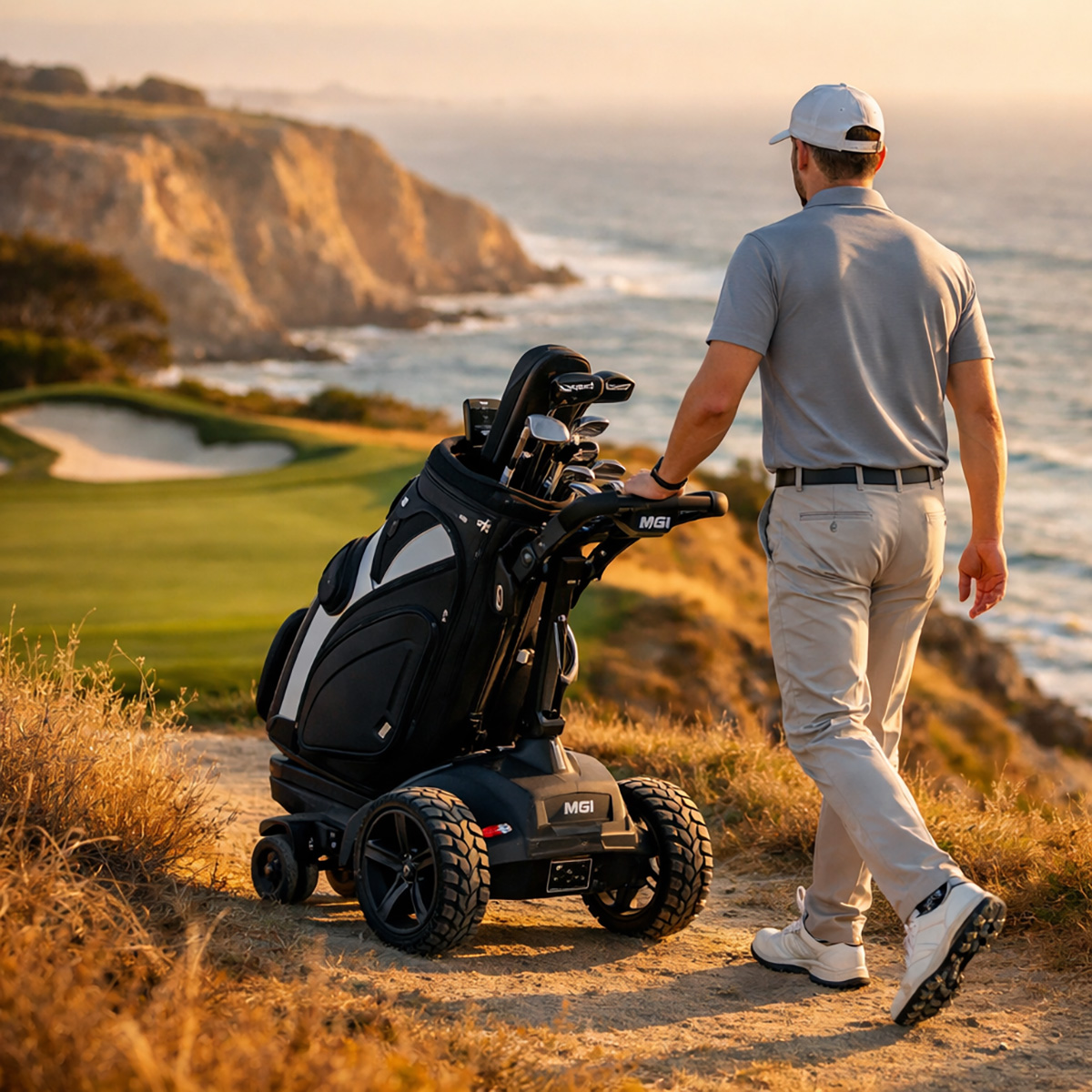
Modern electric push carts are game-changers:
- Technology: GPS-enabled, remote-controlled, auto-braking
- Features: USB charging, scorecard holder, beverage cooler, umbrella holder
- Brands: Stewart, MGI, Motocaddy, Bag Boy, Alphard
Why Golfers Love Them:
- Effortless: Cart follows you or stays on path automatically
- Cool Factor: High-tech appeal, especially to younger golfers
- Performance: Eliminates fatigue, maintains focus
- Status: Premium experience without cart fee
The Business Model:
Equipment Investment:
- Premium electric push carts: $800-2,000 per unit
- Fleet of 10-20 carts: $10,000-30,000 initial investment
- Charging stations: $2,000-5,000
- Storage and maintenance: Minimal
Rental Pricing:
- Standard push cart: $5-8
- Premium manual push cart: $8-12
- Electric push cart: $15-25
- Premium electric with GPS: $20-30
Revenue Projection:
20 electric push carts @ $20 rental:
- 60% utilization (12 rentals/day average)
- 300 operating days/year
- Revenue: 12 × $20 × 300 = $72,000/year
Operating costs:
- Electricity: $500/year
- Maintenance: $2,000/year
- Depreciation: $3,000/year (5-year lifespan)
- Total costs: $5,500/year
Net profit: $66,500/year ROI: ~3 months
Additional Benefits:
- Walking golfers choose your course over competitors
- Cart riders sometimes “downgrade” to electric push carts (additional walking revenue)
- Marketing buzz (social media posts of premium carts)
- Course conditioning benefits (less cart traffic wear)
Operational Tips:
- Charge Premium Pricing
- Position as luxury experience
- “Electric cart rental” vs “push cart rental”
- Bundle with green fee for discount
- Maintenance is Simple
- Daily cleaning and charging
- Monthly wheel and brake checks
- Annual battery assessment
- Reservation System
- Allow advance booking (especially weekends)
- Track utilization data
- Manage inventory
- Marketing
- Feature on website prominently
- Social media showcasing technology
- Testimonials from users
- “Premium Walking Experience” positioning
Revenue Stream 2: Premium Push Cart Storage/Locker Programs
The Concept:
Golfers who walk regularly don’t want to transport push carts in their cars. Offer secure storage at the course.
The Business Model:
Annual Storage Membership:
- Basic push cart storage: $200-400/year
- Premium storage (climate controlled): $400-600/year
- Storage + cart valet service: $600-900/year
What’s Included:
- Dedicated locked storage space
- Cart cleaning after rounds
- Battery charging (electric carts)
- Cart ready at arrival
Revenue Potential:
50 storage members @ $400/year = $20,000 100 storage members @ $400/year = $40,000
Investment:
- Storage racks/lockers: $5,000-15,000
- Minimal space required (unused bag room, corner of cart barn)
- Staff time: 15-30 min/day (cleaning, organizing)
Why Golfers Buy:
- Convenience: Show up and play, cart ready
- Protection: Cart not damaged in car transport
- Space: Frees up garage/trunk space
- Status: “I keep my cart at the club”
Upsell Opportunities:
- Club cleaning added to service: +$10-20/round
- Shoe cleaning: +$5-10/round
- Equipment valet: Store clubs and shoes too: +$200-400/year
Revenue Stream 3: Walking-Specific Memberships
The Walking Member Category
Create a membership tier for dedicated walkers:
Benefits:
- Unlimited walking (no cart fee ever charged if walking)
- Free push cart rental (standard or electric)
- Priority walking tee times
- Walking-only events and competitions
- Discounted guests (walking)
Pricing Strategy:
Traditional membership: $3,000/year (includes unlimited cart use) Walking membership: $2,200/year (includes unlimited push cart)
Why This Works:
For the Course:
- Captures members who would otherwise join elsewhere
- Lower operating costs (no cart depreciation or maintenance)
- Less course wear from cart traffic
- Premium positioning (“eco-friendly membership”)
For the Golfer:
- Saves $800/year vs full membership
- Aligns with their preference
- Access to premium push carts included
- Community of like-minded walkers
Revenue Impact:
If 15% of your membership base converts to walking memberships:
- You “lose” $800/member in dues
- But you gain 15% more members who wouldn’t have joined at full price
- Net result: more total members, more rounds played, more F&B revenue
Plus operational savings:
- Reduced cart fleet needs
- Lower cart maintenance costs
- Reduced course wear
Example:
- 300 traditional members @ $3,000 = $900,000
- Add 50 walking members @ $2,200 = $110,000
- Total: $1,010,000 (12% increase)
Without the walking category, those 50 members likely play elsewhere.
Revenue Stream 4: Walking Accessories & Retail
The Pro Shop Opportunity
Walking golfers need equipment:
High-Margin Products:
- Push Carts (Sales):
- Entry level: $150-250 (markup 40-60%)
- Mid-range: $250-400 (markup 40-50%)
- Premium: $400-800 (markup 35-45%)
- Electric: $800-2,000 (markup 30-40%)
- Golf Bags (Walking-Specific):
- Stand bags: $150-400
- Lightweight carry bags: $100-250
- Premium walking bags: $250-500
- Walking Accessories:
- GPS watches: $200-600
- Rangefinders: $150-500
- Lightweight golf shoes: $100-250
- Hydration packs: $30-80
- Cooling towels: $15-30
- Portable fans: $20-50
- Ball retrievers: $20-50
- Umbrellas: $30-80
- Apparel (Technical):
- Moisture-wicking shirts: $40-80
- UV protection apparel: $50-100
- Lightweight pants/shorts: $60-120
- Compression socks: $15-30
- Performance hats: $25-40
Marketing Strategy:
- “Walker’s Corner” – Dedicated pro shop section
- Seasonal promotions (“Spring Walking Sale”)
- Bundle deals (bag + cart + accessories)
- Demonstrate electric carts in pro shop
- Walking clinics with product education
Revenue Projection:
Conservative estimate:
- 25% of walkers purchase something annually
- Average transaction: $200-400
- 1,000 walking rounds/year = 250 customers
- Revenue: $50,000-100,000
- Margin: 35-45% = $17,500-45,000 gross profit
Partnership Opportunities:
- Push cart manufacturers (consignment or demo programs)
- GPS/rangefinder companies (demo days)
- Apparel brands (walking-specific lines)
- Commission on referrals/sales
Revenue Stream 5: Walking Events & Tournaments
Walking-Only Competitions
Host events specifically for walkers:
Event Types:
- Walking Championships:
- Monthly medal play
- Seasonal series
- Annual club champion (walkers only)
- Entry fee: $30-60
- Charity Walk-and-Play:
- Golf + walking for cause
- Sponsorship opportunities
- Higher entry fees ($100-200)
- Health/wellness positioning
- Corporate Walking Events:
- Team building + exercise
- Health-conscious companies love this
- Premium pricing ($150-250/person)
- Include meals and coaching
- Walking Leagues:
- Weekly 9-hole leagues
- Teams of 4-6 players
- Season-long competition
- League fees: $200-400/season
Revenue Potential:
- 12 monthly tournaments @ 40 players @ $50 entry = $24,000/year
- 2 charity events @ 80 players @ $150 = $24,000/year
- 4 corporate outings @ 40 players @ $200 = $32,000/year
- 2 walking leagues @ 60 players @ $300 = $36,000/year
Total: $116,000 in event revenue
Plus F&B, pro shop sales, and marketing value.
Why Walking Events Work:
- Unique positioning (not every course offers this)
- Attracts health-conscious demographics
- Corporate wellness trend alignment
- Media/PR opportunities (“healthy golf”)
- Community building among walkers
Revenue Stream 6: Caddie & Forecaddie Programs
The Premium Service
For courses with appropriate terrain and clientele:
Program Types:
- Traditional Caddie:
- Carries bag, reads greens, provides yardages
- Premium experience
- Fee: $60-150+ per bag
- Forecaddie:
- Drives ahead in cart, spots balls, provides yardages
- Works for group of 4
- Fee: $40-80 per player
- Walking Guide:
- Combines caddie and course knowledge/history
- Educational + service
- Fee: $80-120 per bag
Revenue Model:
Course facilitation fee:
- Course takes 15-25% of caddie fee
- Caddies keep 75-85%
Example:
- 200 caddie loops per year
- Average fee: $100
- Course take: 20% = $4,000/year
Seems small, but:
- No operational costs (caddies are contractors)
- Attracts premium customers (spend more on F&B)
- Differentiates course from competitors
- Marketing value (“full-service walking experience”)
Implementation:
- Partner with local caddie programs or Evans Scholars
- Weekend/peak time availability
- Advance reservation system
- Training on course knowledge and etiquette
Revenue Stream 7: F&B Enhancements for Walkers
The Hydration and Nutrition Opportunity
Walking golfers burn 1,200-2,500 calories and need hydration/fuel.
Strategic Placement:
- Walking-Friendly Halfway House:
- Located at easy walking access (not cart-path only)
- Quick-serve format
- Healthy options (fruits, protein bars, smoothies)
- Self-service beverage stations
- On-Course Water Stations:
- Every 3-4 holes
- Branded bottles available for purchase
- Coolers with ice
- Fruit-infused water
- Walking Snack Packs (Pre-Order):
- Picked up at turn or delivered to specific hole
- Healthy snack selection
- Hydration packet
- $15-25 price point
- Post-Round Walking Menu:
- Recovery smoothies
- High-protein meals
- Healthy options positioned for walkers
- “Refuel After Your Walk” marketing
Revenue Impact:
Walking golfers often spend MORE on F&B than cart riders:
- Burning more calories = hungrier
- More time on course = more opportunities
- Health-conscious = willing to pay for quality
Average increase: $8-15 per walker
1,000 walking rounds/year × $12 average = $12,000 additional F&B revenue
Revenue Stream 8: Walking Amenities & Services
The Little Things That Add Up
Locker Room Access:
- Day lockers for walkers to store street shoes/items
- $5-10 per use
- Shower access (premium courses)
- Drives post-round F&B stays
Club Cleaning:
- Post-round club cleaning for walkers
- $10-15 service
- Quick turnaround while golfer eats
- 20% take rate × 1,000 rounds = $2,000-3,000/year
Part 5: Implementing a Walking-Friendly Strategy
Assessing Your Course
Is Your Course Walking-Friendly?
Evaluate These Factors:
- Green-to-Tee Distances:
- Under 50 yards: Excellent
- 50-100 yards: Good
- 100-200 yards: Manageable
- Over 200 yards: Challenging for walkers
- Elevation Changes:
- Flat to gentle: Excellent
- Moderate hills: Good
- Significant elevation: Manageable with push carts
- Extreme elevation: Cart-dependent
- Path Infrastructure:
- Dedicated walking paths: Excellent
- Shared cart paths wide enough: Good
- Limited paths: Need improvement
- No paths: Major investment required
- Climate:
- Temperate year-round: Excellent
- Seasonal walking (spring/fall): Good
- Hot summers: Need amenities (shade, hydration)
- Extreme weather: Limited walking season
- Current Cart Revenue Dependency:
- <30% of revenue: Easy to accommodate walking
- 30-50%: Need strategic balance
- 50%: Walking must be incremental, not replacement
Honest Assessment:
Some courses aren’t suitable for walking. Don’t force it if:
- Green-to-tee distances exceed 200 yards regularly
- Extreme elevation makes walking dangerous
- Cart-only areas due to safety/maintenance
But most courses can accommodate walking with proper planning.
Creating a Walking Program
Phase 1: Infrastructure (Month 1-3)
Minimum Requirements:
- Clear walking paths or routes
- Water stations (every 4-6 holes)
- Adequate restrooms
- Push cart rentals available
Recommended Additions:
- Dedicated push cart storage
- Bag drop and retrieval service
- Walking path signage
- Halfway house with walker access
Premium Features:
- Electric push cart fleet
- Walking locker room
- Caddie program
- Club cleaning service
Investment:
- Basic: $5,000-15,000
- Standard: $15,000-40,000
- Premium: $40,000-100,000+
Phase 2: Policies & Pricing (Month 2-3)
Walking Policy: Define when/where walking is permitted:
- All times (ideal)
- Specific tee times (morning slots)
- Seasonal (weather dependent)
- Cart-path-only days (walking encouraged)
Pricing Structure:
Option A – Walking Discount:
- Riding rate: $75 (green fee + cart)
- Walking rate: $55 (green fee only)
- Clear $20 savings incentive
Option B – Unbundled:
- Green fee: $55
- Cart fee (optional): $20
- Transparent, golfer’s choice
Option C – Walking Premium (Reverse Psychology):
- Standard green fee: $55 (includes cart)
- Walking with premium push cart: $50
- Positions walking as upgraded experience, not budget option
Membership Pricing:
- Standard: Unlimited golf + carts
- Walking: Unlimited golf, free push carts, no cart fees
- Price walking membership 20-30% below standard
Phase 3: Equipment & Rentals (Month 3-4)
Push Cart Fleet:
Starter Fleet (20-30 carts total):
- 10 premium manual ($150-250 each) = $1,500-2,500
- 5 electric push carts ($800-1,500 each) = $4,000-7,500
Total investment: $5,500-10,000
Rental Pricing:
- Premium manual: $8-12
- Electric: $15-25
Maintenance:
- Daily: Clean, check wheels, charge electrics
- Weekly: Detailed cleaning, mechanical check
- Monthly: Wheel bearing lubrication, brake adjustment
- Annual: Replace worn parts, repaint/refurbish
Phase 4: Marketing & Communication (Month 4-5)
Website Updates:
- “Walking-Friendly Course” badge
- Walking rates clearly displayed
- Push cart rental information
- Walking tips and course recommendations
Signage:
- Pro shop: “Premium Push Carts Available”
- First tee: “We Welcome Walkers”
- Walking path markers on course
Digital Marketing:
- Email campaign to database: “Now offering premium walking experience”
- Social media: Photos of walkers, push carts, scenery
- Google Business: Update description with “walking-friendly”
- Local fitness groups: Partner for promotion
PR Opportunities:
- “Health-Conscious Golf Course”
- Partner with health organizations
- Walking events for charity
- Media coverage of walking programs
Phase 5: Staff Training (Month 5)
Key Training Areas:
Starter/Ranger:
- Walking group pace monitoring
- Push cart distribution and instruction
- Walking path guidance
- Encouraging ready golf for walkers
Pro Shop:
- Walking benefits articulation
- Push cart rental process
- Accessory recommendations
- Booking walking-friendly tee times
Food & Beverage:
- Walker-specific menu items
- Quick service for walkers at turn
- Hydration station management
Maintenance:
- Walking path maintenance priority
- Water station stocking and cleaning
- Push cart storage organization
Phase 6: Launch & Monitor (Month 6+)
Soft Launch:
- Start with morning walking tee times
- Invite feedback from early adopters
- Refine based on experience
- Build word-of-mouth
Grand Opening:
- Walking-focused event or tournament
- Media coverage
- Promotional rates for first month
- Push cart demos
Ongoing Monitoring:
Track These Metrics:
- Walking rounds as % of total
- Push cart rental utilization
- Walking membership adoption
- Revenue per walking round (F&B, pro shop)
- Pace of play (walkers vs. riders)
- Customer satisfaction (surveys)
Quarterly Review:
- Assess financial performance
- Adjust pricing if needed
- Expand or contract offerings based on demand
- Plan seasonal adjustments
Part 6: Case for Change
Why Courses Should Embrace Walking Now
1. Market Trends Favor Walking
- Fitness tracking normalization
- Health consciousness growth
- Environmental awareness
- Demographic shifts (younger golfers prefer active experiences)
Courses that don’t accommodate walking risk losing market share.
2. Diversification of Revenue
Over-reliance on cart revenue is risky:
- Electric vehicle trends (lower cart replacement costs but lower revenue justification)
- Younger golfers less cart-dependent
- Economic downturns hit discretionary spending (cart fees)
Walking revenue streams (push carts, retail, events) diversify income.
3. Course Conditioning Benefits
Walking reduces:
- Turf wear from cart traffic
- Soil compaction
- Cart path maintenance needs
- Irrigation complications from compaction
Better conditions = higher rates = more revenue.
4. Competitive Differentiation
Most courses either:
- Require carts (alienates walkers)
- Tolerate walking without amenities (misses revenue)
Few courses actively embrace and monetize walking.
This is your competitive opportunity.
5. Environmental & Social Responsibility
Courses promoting walking can market:
- Carbon-neutral golf options
- Health and wellness leadership
- Community fitness initiatives
- Sustainable recreation
Appeals to corporate groups, younger demographics, and PR opportunities.
The Financial Reality
Example Course: 35,000 Annual Rounds
Current State (Cart-Mandatory):
- Cart revenue: 35,000 × $20 = $700,000
- Push cart rentals: $0
- Walking retail: $0
- Walking events: $0
- Total: $700,000
Walking-Friendly State (20% Convert to Walking):
- Cart revenue: 28,000 × $20 = $560,000 (−$140,000)
- Push cart rentals: 7,000 × $15 avg = $105,000 (+$105,000)
- Walking retail (accessories): $40,000 (+$40,000)
- Walking events: $30,000 (+$30,000)
- Increased F&B from walkers: 7,000 × $10 = $70,000 (+$70,000)
- Walking memberships (50 new): $110,000 (+$110,000)
- Total: $915,000 (+$215,000 or +31%)
Plus operational savings:
- Reduced cart fleet size: −$30,000/year (maintenance, depreciation)
- Lower course wear: −$15,000/year (reduced maintenance)
- Total savings: $45,000
Net improvement: +$260,000 annually
This assumes only 20% adoption. Many courses could reach 30-40% walking rounds.
Part 7: Addressing Objections
“Walking Will Kill Our Cart Revenue”
Reality: Done right, walking is incremental revenue, not replacement.
- Some golfers walk regardless (you’re just capturing their spend now)
- New golfers join because of walking options (wouldn’t have played otherwise)
- Cart-mandatory policies drive players to other courses
- Walking revenue streams (push carts, retail, events) offset cart fee loss
Strategy: Position walking as premium alternative, not budget option.
“Walkers Slow Down Play”
Reality: Poor players slow down play, regardless of mode.
- Skilled walkers are as fast or faster than riders
- Management and policies matter more than walking vs. riding
- Separate walking tee times if needed
- Enforce ready golf for everyone
Strategy: Monitor pace by group behavior, not transportation mode.
“Our Course Isn’t Walkable”
Reality: Some courses aren’t, but most can accommodate walking.
- Assess honestly (green-to-tee distances, elevation)
- If walkable, invest in making it walker-friendly
- If not walkable, focus on cart experience quality
Strategy: If truly cart-dependent, own it and optimize cart experience.
“We’ll Need to Buy Expensive Equipment”
Reality: Initial investment is modest and pays back quickly.
- Basic push cart fleet: $2,000-5,000
- Electric push cart fleet: $10,000-30,000
- ROI: 3-12 months typically
Strategy: Start small, scale based on demand.
“Our Members Won’t Like It”
Reality: Most members support options, even if they don’t personally walk.
- Offering walking doesn’t eliminate carts
- Many members walk occasionally (early morning, practice rounds)
- Younger members strongly support walking options
- Members’ guests appreciate walking options
Strategy: Survey members, communicate options clearly, implement gradually.
Conclusion: The Walking Opportunity
Golf is experiencing a walking renaissance. The question isn’t whether walking will grow—it’s whether your course will capture that growth or watch competitors do it.
The evidence is clear:
✅ Walking doesn’t inherently slow play (when managed properly)
✅ Walking provides significant health benefits(cardiovascular, musculoskeletal, mental)
✅ Walking creates diverse revenue streams (push carts, retail, events, memberships)
✅ Walking appeals to growing demographics (fitness-conscious, younger golfers, environmentalists)
✅ Walking-friendly courses differentiate in competitive markets
The strategy is straightforward:
- Assess your course’s walking suitability
- Invest in basic walker infrastructure and equipment
- Price walking strategically (not just a discount)
- Market walking as premium experience
- Diversify revenue through walking-specific offerings
- Monitor results and optimize
The opportunity is now.
While most courses either ignore walking or tolerate it grudgingly, you can lead your market by actively embracing, enhancing, and monetizing the walking experience.
Your competitors are leaving money on the table.
Don’t make the same mistake.
Golf Consultants can help you:
- Assess your course’s walking potential
- Design walking programs and pricing strategies
- Source and negotiate equipment purchases
- Develop marketing campaigns for walking initiatives
- Train staff on walker services
- Monitor and optimize walking revenue
Contact: Golf Consultants | San Diego, CA golf-consultants.com – Follow us on Linkedin
Let’s turn your walking golfers into a competitive advantage and revenue stream.